The Vector Loop: give the next decision a stronger basis
Brief. Test. Deploy. Learn. A practical cycle for linking the work you do to the change you want to see. Speed comes from running the loop often; direction comes from what you learn each time round.
Each lap points truer: the learning from one decision sharpens the brief for the next.
Each lap points truer.
Name the problem, the person responsible and the decision the work must inform. Record the baseline and agree outcome, quality and timing measures.
Write the hypothesis, choose suitable evidence and set the limits before starting. Capture review time, rework and exceptions as well as output.
Check the agreed criteria and decide whether to proceed, adapt or stop. Keep human review where the decision requires it.
Record what happened, what remains uncertain and what should change. A faster cycle is useful when its quality and outcomes justify it.
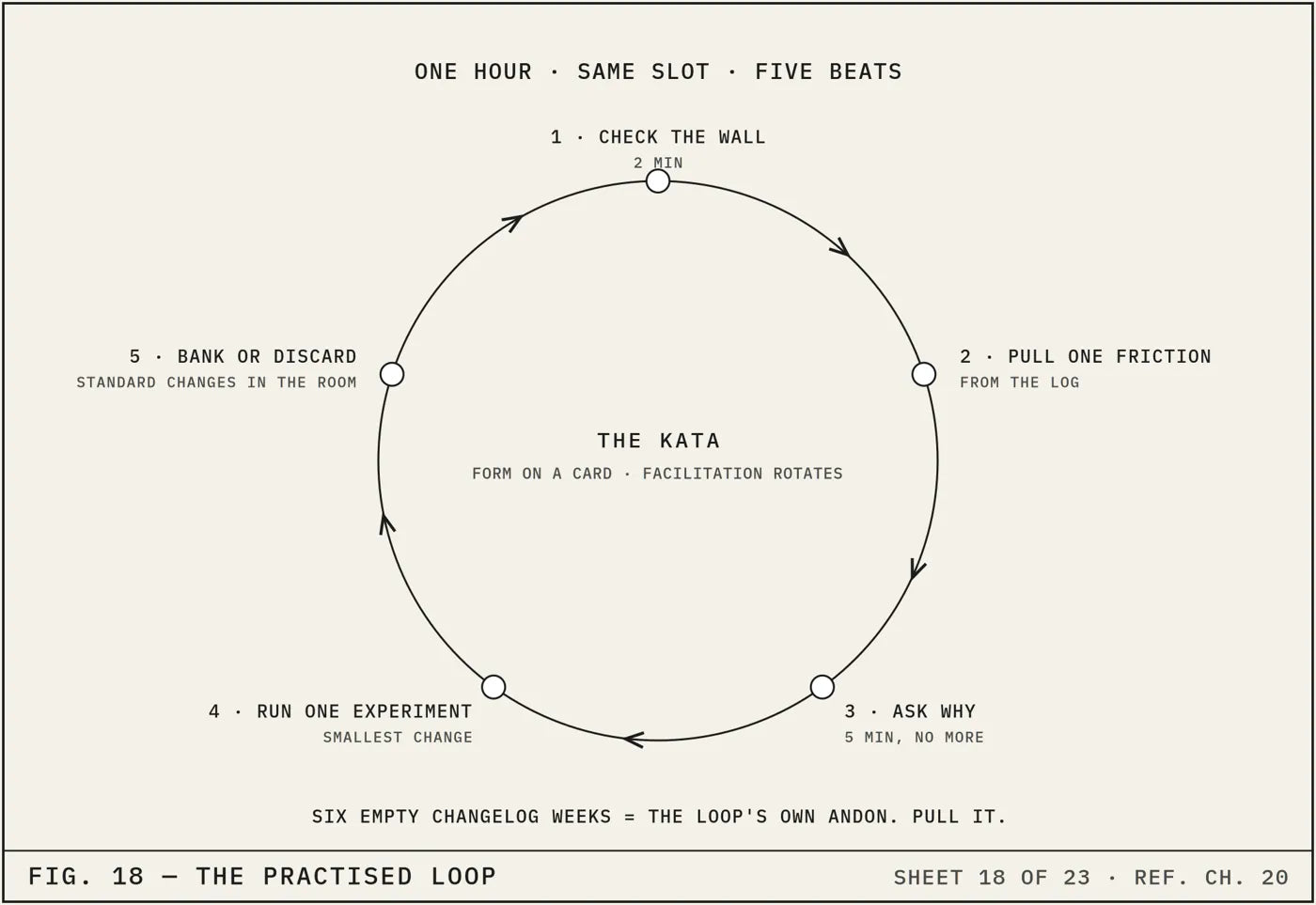
The practised loop.
One hour, same slot, five beats: check the wall, pull one friction, ask why, run one experiment, bank or discard. The Vector Loop is this kata applied to marketing work, so learning compounds on a cadence instead of waiting for a quarterly review.
See all 23 figures →The same loop, three places.
Connect creative and account decisions to the agreed objective, available evidence and constraints. Public ad counts alone cannot show whether that loop works.
Use the loop to agree what the agency briefs, tests and reports, and to see whether learning changes the plan.
Start with one workflow. Measure elapsed time, effort, quality, rework and adoption alongside the business result.
Built on eighty years of production thinking.
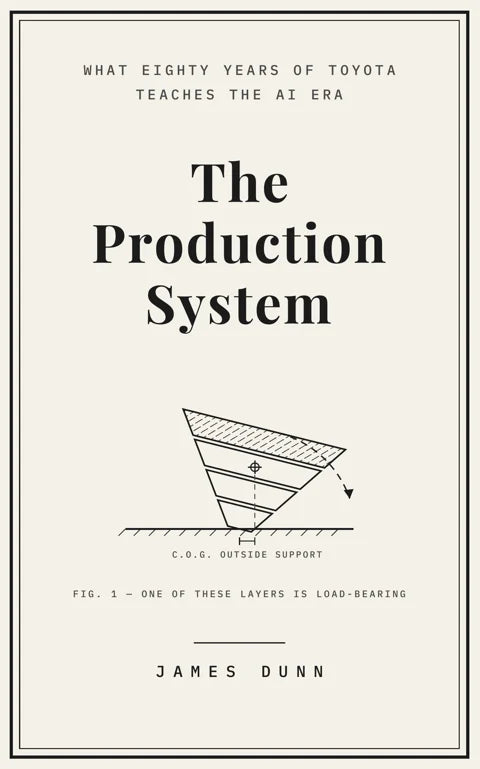
The loop draws on The Production System, James Dunn's book on what Toyota's production principles teaches the AI era: pull work rather than push it, stop the line when quality slips, and make the whole stream visible.